
Contrast therapy—alternating between extreme thermal heat (Finnish sauna or dry sauna at 80°C to 100°C) and profound cold (ice bath or plunge at 5°C to 12°C)—has transitioned from an ancient Scandinavian wellness ritual to one of the most rigorously validated recovery modalities in modern sports medicine.
Executive Summary & Research Finding
Contrast therapy guide: sauna and cold plunge ratios, heat shock protein activation, vascular pumping mechanics, and why you must always end on cold.
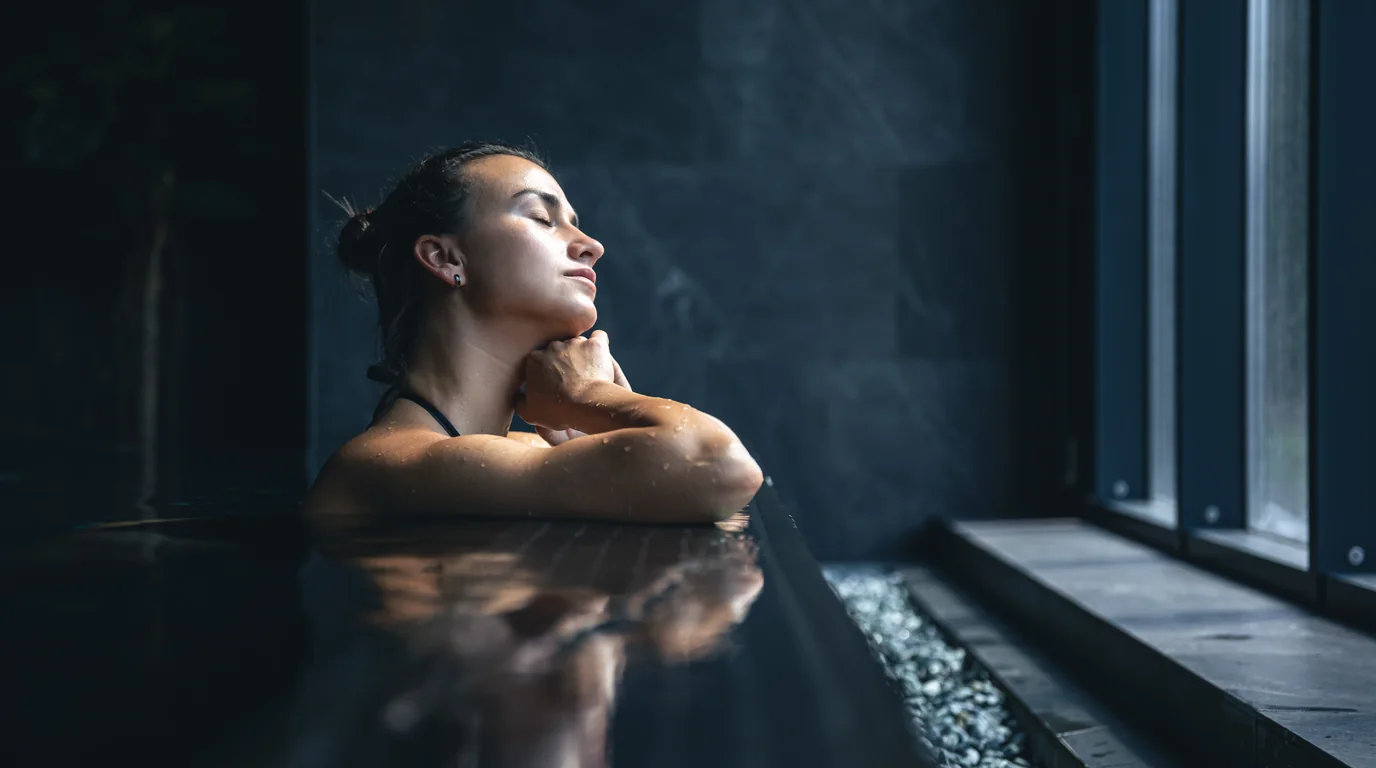
When practiced systematically, contrast therapy trains the autonomic nervous system to toggle seamlessly between high sympathetic drive and deep parasympathetic restoration. Here is the physiological blueprint and exact protocol to maximize cellular longevity and cardiovascular elasticity.
Master Contrast Rounds with Icewise
Contrast therapy requires strict interval timing. Use Icewise: Cold Shower & Plunge Tracker to track your hot/cold rounds, measure total weekly cold exposure, and maintain recovery streaks.
The Biological Mechanism: The Vascular Hydro-Pump
Under 15 to 20 minutes of intense heat exposure in a sauna, cardiac output increases by 50% to 70%, mimicking moderate aerobic exercise. Peripheral capillaries dilate dramatically (vasodilation) to dissipate heat through sweat. Heart rate climbs to 120-150 beats per minute, delivering oxygenated blood deep into micro-capillaries.
When you immediately submerge yourself into a 10°C cold plunge, the exact opposite occurs: sudden, powerful cutaneous vasoconstriction clamps down peripheral blood vessels, driving blood inwards to protect core organs. This rapid alternating cycle acts as a mechanical vascular pump, accelerating the clearance of lactate and cellular debris.
| Protocol Phase | Temperature Range | Optimal Duration | Primary Biological Trigger |
|---|---|---|---|
| Round 1: Heat (Sauna) | 80°C - 90°C (176°F - 194°F) | 15 - 20 minutes | Heat Shock Protein (HSP70) synthesis, profuse sweating |
| Round 1: Cold (Plunge) | 8°C - 12°C (46°F - 54°F) | 2 - 3 minutes | Noradrenaline release, acute vasoconstriction |
| Round 2: Heat (Sauna) | 85°C - 95°C (185°F - 203°F) | 12 - 15 minutes | Cardiovascular endurance, growth hormone pulsatile release |
| Round 2: Cold (Plunge) | 8°C - 12°C (46°F - 54°F) | 2 - 3 minutes | Cold Shock Protein (RBM3) induction, mental resilience |
| Round 3: Heat (Sauna) | 85°C - 95°C (185°F - 203°F) | 10 - 15 minutes | Nitric oxide production, arterial stiffness reduction |
| Round 3: Final Cold Plunge | 5°C - 10°C (41°F - 50°F) | 2 - 3 minutes | Søberg Principle: non-shivering thermogenesis & metabolic boost |
Heat Shock Proteins (HSP) vs. Cold Shock Proteins (CSP)
At the cellular level, thermal extremes activate molecular chaperones that preserve protein structure and protect against neurodegenerative decline:
- Heat Shock Protein 70 (HSP70): Triggered by sauna hyperthermia, HSP70 repairs misfolded proteins, refolds damaged cellular structures, and prevents oxidative protein aggregation linked to Alzheimer's and Parkinson's disease.
- RNA-Binding Protein 3 (RBM3): Cold shock proteins synthesized in the liver and brain during acute cold water immersion stimulate synaptogenesis (the regeneration of neural connections) and safeguard synaptic pathways from age-related degradation.
The Søberg Principle: Why You Must Always End on Cold
Formulated by metabolic researcher Dr. Susanna Søberg, this principle dictates that if your goal is metabolic stimulation and sustained fat oxidation, you should always end the contrast session on cold. If you end on sauna heat, your body uses passive thermal radiation to stay warm.
By ending with a cold plunge and allowing your body to air-dry naturally, your physiology is forced to generate its own heat through non-shivering thermogenesis. This forces brown adipose tissue (BAT) to burn intracellular triglycerides to maintain 37°C core temperature, elevating baseline metabolic burn for hours.
Plan Your Protocol With Precision
Track every second of your sauna and ice bath intervals with Icewise. Set customized timers for hot-and-cold rounds and monitor your weekly progress on Android.
Frequently Asked Questions
How many times per week should I perform contrast therapy?
Two to three sessions per week provide maximal physiological adaptations without inducing central nervous system overtraining. Keep total weekly cold plunge time between 11 and 15 minutes, and weekly sauna time between 50 and 60 minutes.
Should I dry off between sauna and cold plunge?
Rinse off excess sweat in a lukewarm or cool shower before stepping into the cold plunge tub for hygiene, but do not towel off or rest for prolonged periods. Move directly from the heat into the plunge to maintain the vascular pumping effect.
Can people with cardiovascular conditions practice contrast therapy?
Anyone with pre-existing hypertension, arrhythmias, or cardiovascular pathology should consult a physician prior to contrast therapy, as the rapid shift between vasodilation and vasoconstriction causes significant acute blood pressure fluctuations.