Walk into any university amphitheater or STEM lecture hall, and you will witness a universal struggle: hundreds of students furiously typing on mechanical laptop keyboards or scribbling across spiral notebooks, eyes darting anxiously between the blackboard and their notes. The human cognitive bottleneck is merciless: the average university professor lectures at 140 to 180 words per minute, while the fastest student typist averages just 40 to 60 words per minute.
Executive Summary & Research Finding
Double your exam retention with automated lecture transcription. Learn the proven student audio recording workflow for transforming university lectures into clean study notes.
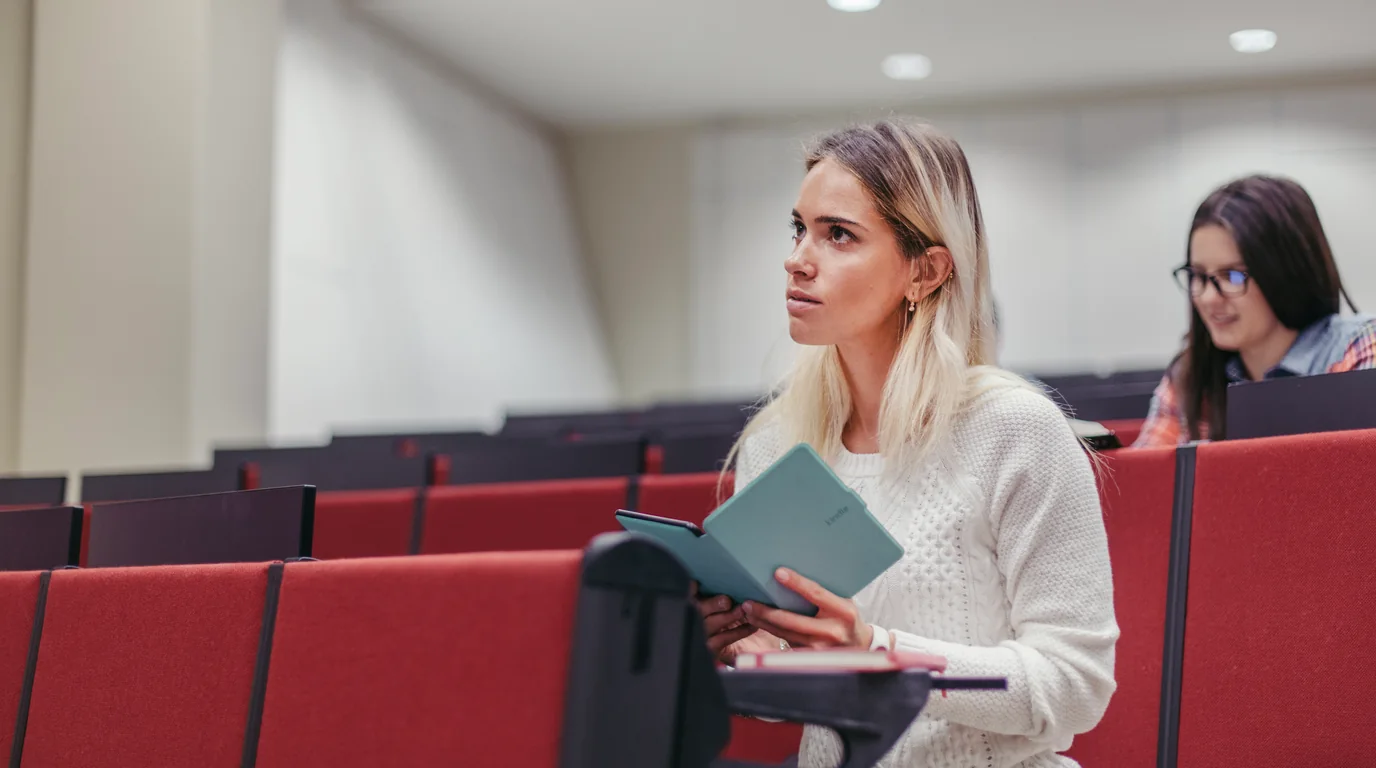
When students attempt to act as stenographers, their prefrontal cortex becomes so consumed with verbatim motor transcription that they fail to process the underlying conceptual architecture. By the time the professor advances to slide 12, the student is still desperately capturing equation derivations from slide 8. The solution is not typing faster; it is fundamentally separating audio capture from note synthesis.
Master Your Academic Lectures With AI
Ace your midterms without missing a single concept. Use Hushnote: AI Voice Recorder on Google Play to record high-fidelity class audio and automatically generate structured, exam-ready study notes.
The Two-Pass Lecture Learning Framework
Top-performing medical students, engineering majors, and law scholars do not try to produce final study notes during class. Instead, they implement the cognitive science-backed "Two-Pass Framework":
| Pass Phase | Primary Activity | Cognitive Focus | Audio Tool Role |
|---|---|---|---|
| Pass 1: In the Lecture Hall | Active Listening & Concept Mapping | Deep mental models, asking questions, noting confusion points | Hushnote records high-clarity audio in background |
| Pass 2: Evening Review (30 mins) | Synthesis & Active Recall Generation | Reviewing AI summary, flashcards, clarifying confusing timestamps | Jump to exact speech timestamps for unclear equations |
Overcoming the Acoustic Challenges of Large Lecture Halls
University lecture halls are notorious acoustic nightmares. High ceilings, hard cinderblock walls, reverberant wooden desks, and students coughing or shuffling backpacks create massive reverberation. To ensure pristine voice transcription:
- Seat in the Central Front Third: Sit between rows 2 and 4 directly aligned with the professor's podium or PA speakers. Direct sound arrival minimizes room echo.
- Point Microphones Toward the Speaker: The primary microphone on modern Android devices is located on the bottom bezel. Point the base of your phone toward the instructor.
- Leverage Hushnote Voice Isolation: Hushnote automatically filters out HVAC rumble, mechanical laptop typing clicks, and whispering, isolating the professor's vocal frequencies.
Transforming Raw Transcripts into Active Recall Flashcards
A 90-minute organic chemistry lecture generates approximately 11,000 words of spoken dialogue. Rereading a 25-page wall of text is a form of passive learning that produces an illusion of competence without genuine exam recall. Hushnote's automated summarization organizes the material into four high-yield revision structures:
- Key Terminology & Definitions: Crucial formulas, biological definitions, and historical dates are extracted into bolded vocabulary blocks.
- Core Theoretical Pillars: Sprawling spoken explanations are condensed into concise hierarchical bullet points.
- Explicit Professor Hints: When an instructor says "Make sure you remember this for the midterm," AI summary models identify high-intent linguistic markers and highlight the warning.
- Audio-Synced Timestamps: If an equation derivation is difficult to understand in text format, tapping the timestamp replays the professor's exact verbal explanation instantly.
Frequently Asked Questions
Do I need permission to record lectures?
Most universities have standard academic policies regarding lecture recording. Many professors actively welcome recording for personal study, and accessibility services routinely approve recording for students. Always review your course syllabus.
Can I record a 3-hour marathon seminar in one go?
Yes! Hushnote is engineered for stability during continuous, extended recordings without thermal throttling or memory leaks, ensuring your marathon lab or seminar is captured safely.