
According to the World Health Organization (WHO), more than 50 percent of patients with chronic conditions fail to take their medications as prescribed. In the United States alone, medication non-adherence leads to over 125,000 preventable deaths each year and causes up to 25 percent of all hospital admissions.
Executive Summary & Research Finding
Struggling to remember daily medications or vitamins? Learn how habit-stacking and intelligent pill reminder systems prevent missed doses and accidental double-dosing.
Forgetting a daily dose is rarely a matter of carelessness. Between irregular work hours, changing morning routines, and complicated prescriptions requiring specific meal timing, human memory is poorly equipped to manage multi-dose schedules without an external system.
The Real Clinical Dangers of Inconsistent Dosing
Medications rely on maintaining a steady therapeutic concentration in your bloodstream. Missing doses or taking pills erratically causes sharp pharmacological fluctuations:
| Medication Category | Common Examples | Risk of Missed Dose | Clinical Impact |
|---|---|---|---|
| Cardiovascular & Blood Pressure | Lisinopril, Amlodipine, Beta-Blockers | Rebound hypertension spikes | Increased risk of stroke and cardiac strain |
| Antibiotics | Amoxicillin, Azithromycin, Doxycycline | Sub-therapeutic bacterial exposure | Bacterial resistance and infection recurrence |
| Thyroid & Hormones | Levothyroxine, Contraceptives | Hormonal volatility | Fatigue, irregular cycles, metabolic disruption |
| Mental Health (SSRIs / SNRIs) | Sertraline, Escitalopram, Duloxetine | Discontinuation syndrome | Severe dizziness, brain zaps, acute anxiety |
Three Evidence-Based Habits for Perfect Adherence
1. Practice Behavioral Habit-Stacking
Link your medication intake directly to an established daily ritual rather than an arbitrary clock time. For example: take your morning pill immediately after pouring your first glass of water, or take evening vitamins right after brushing your teeth.
2. Track Inventory and Automate Refill Warnings
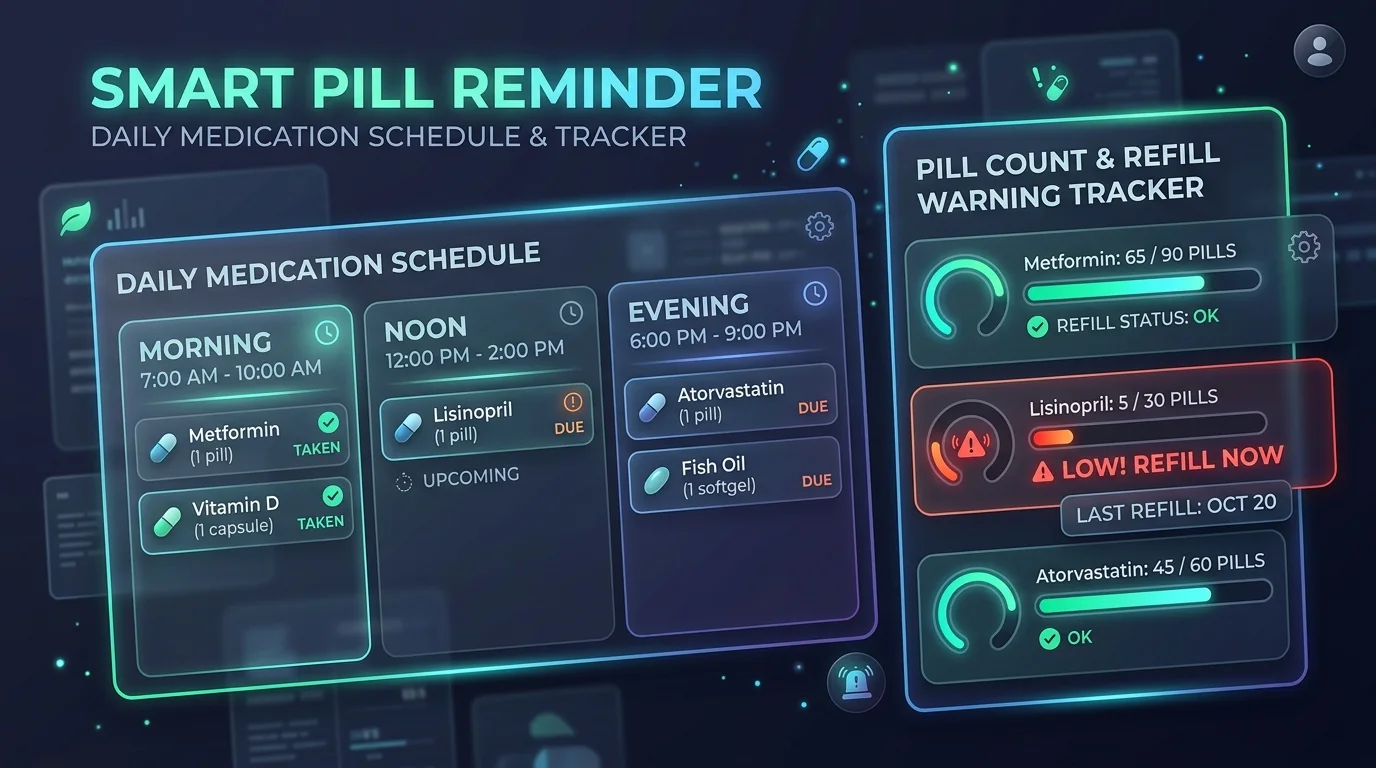
A common cause of missed treatment is running out of pills on a Sunday evening when the pharmacy is closed. Set your tracking system to calculate remaining tablet counts and warn you when you drop below a 7-day supply.
3. Eliminate Accidental Double-Dosing
When you cannot remember whether you took your pill 20 minutes ago, you face a dangerous dilemma: risk a double dose or risk missing the treatment entirely. Logging each dose with a single tap creates an undeniable timestamped record.
Smart Medication Safety Tip
Never store medications in bathroom medicine cabinets where high humidity and temperature swings degrade chemical potency. Keep pills in a cool, dry area such as a kitchen cabinet or bedside table.
Take Control of Your Health Schedule
Using My Pills Reminder provides custom dose alerts, visual morning-noon-night time slots, refill countdowns, and family prescription management so you never have to second-guess your daily healthcare routine again.