
Medication non-adherence in seniors is responsible for up to 33% of medicine-related hospital admissions and over 125,000 preventable deaths annually. For adults over 65 managing polypharmacy (five or more concurrent prescriptions), the primary hazards are not intentional refusal, but cognitive fatigue, vision impairment, complex titration schedules, and accidental double-dosing. Establishing an objective, closed-loop caregiver tracking system eliminates memory dependence and keeps vulnerable loved ones safe.
Executive Summary & Research Finding
Medication adherence checklist for caregivers: how to organize elderly parent prescriptions, avoid accidental double-dosing, and manage polypharmacy safely.
Critical High-Risk Medication Classes in Elderly Care
Certain medication classes possess narrow therapeutic indexes where a single missed dose or an accidental double dose can trigger acute medical emergencies.
| Drug Class | Common Examples | Risk of Missed Dose | Risk of Accidental Double Dose | Caregiver Safety Protocol |
|---|---|---|---|---|
| Anticoagulants / Blood Thinners | Apixaban, Warfarin, Rivaroxaban | Acute ischemic stroke or deep vein thrombosis | Internal hemorrhage or gastrointestinal bleeding | Log exact intake timestamp; never double up to compensate |
| Anti-Hypertensives | Amlodipine, Lisinopril, Metoprolol | Rebound hypertension and increased stroke risk | Severe orthostatic hypotension, syncope, and fall fractures | Check resting blood pressure before administering PRN doses |
| Antidiabetic Agents | Metformin, Glipizide, Basal Insulin | Hyperglycemic crisis, ketoacidosis, dehydration | Life-threatening hypoglycemia, confusion, coma | Verify meal carbohydrate intake before administering morning dose |
| Diuretics | Furosemide, Hydrochlorothiazide | Peripheral edema, pulmonary congestion, congestive heart failure | Severe dehydration, hypokalemia, electrolyte arrhythmias | Administer before 2:00 PM to prevent nocturnal bathroom falls |
| Thyroid Hormones | Levothyroxine | Chronic fatigue, cognitive slowing, constipation | Tachycardia, atrial fibrillation, severe agitation | Strict morning administration 60 min before breakfast with water |
The 5-Step Failsafe Caregiver Medication Protocol
- Conduct a quarterly 'Brown Bag' review: Gather every single bottle, over-the-counter pill, and herbal extract into one container and present it to the primary physician to eliminate redundant generic/brand duplicates.
- Color-code and label bottle caps: Affix high-contrast large-print labels or colored tape matching time of day (Yellow = Morning, Orange = Noon, Blue = Bedtime).
- Implement closed-loop confirmation: Require the senior to tap a mobile checkmark or mark a physical ledger the exact instant pills are swallowed, never before.
- Lock down reserve supply bottles: Keep 90-day refill bottles stored in a locked cabinet, dispensing only 7 days' worth into daily organizers to prevent unintentional overdoses during bouts of disorientation.
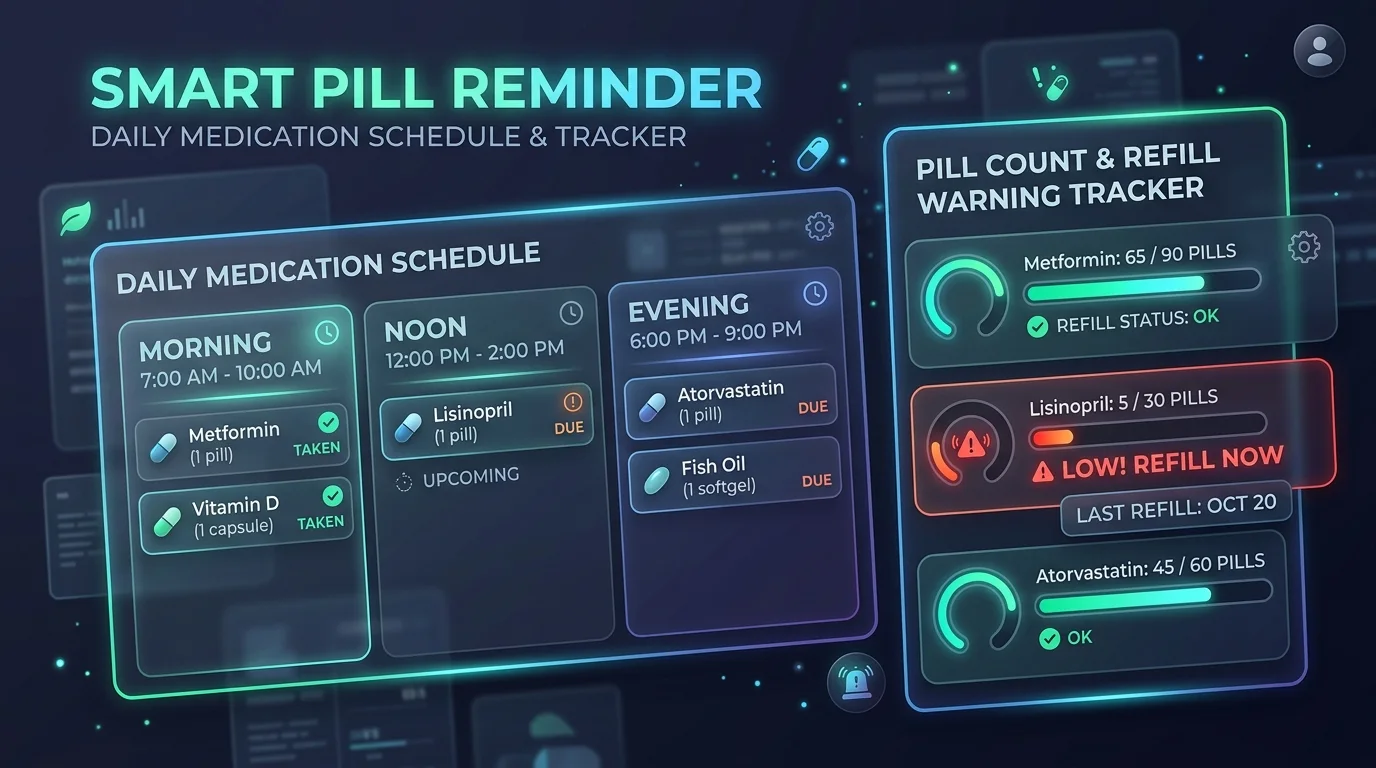
- Program automated inventory threshold alerts: Set reminders when blister packs or pill bottles drop below 5 days of supply to avoid emergency pharmacy runs over holidays.
The Danger of 'Compensation Dosing'
If an elderly parent realizes at 3:00 PM that they forgot their 8:00 AM heart medication, their natural instinct is often to take two pills at once. In geriatric pharmacology, 'doubling up' is frequently more hazardous than skipping. Unless explicitly instructed by a physician, skipped doses should usually be logged and skipped rather than stacked.
How Does Cognitive Decline Interfere with Pill Organizers?
Traditional plastic weekly pill sorters (M-T-W-Th-F-S-Su) have a critical flaw: an older adult with mild cognitive impairment or macular degeneration can easily open Thursday instead of Tuesday, or forget whether they took the compartment 20 minutes ago. Once a plastic compartment is empty, there is zero verifiable record of whether the pills were swallowed or accidentally knocked onto the carpet.
Why Is a Digital Medication App Better than Paper Logs?
Paper charts are static and cannot ring an alarm when an essential evening dose is delayed by 45 minutes. With My Pills Reminder, family caregivers can set persistent alarms that repeat until acknowledged, view comprehensive adherence rate charts, track exact pill inventory counts, and receive refill warnings before prescriptions run out. Giving your parents a frictionless, high-contrast, easy-to-read app safeguards their independence while providing you with transparent oversight.