For budget backpackers, solo adventurers, study-abroad students, and digital nomads roaming the globe, youth hostels booked via Hostelworld, Booking.com, or direct reservation platforms represent the vibrant lifeblood of international travel. From communal rooftop bars in Barcelona and converted industrial lofts in Berlin to lively surf lodges in Sydney and neon-lit pod hostels in Tokyo, hostels offer unmatched cultural camaraderie, affordable lodging, and spontaneous friendships. Yet, the very communal intimacy that makes hostel life so deeply rewarding also creates acute personal privacy vulnerabilities. Having Hidden Camera Detector App installed on your smartphone is an indispensable safety defense for anyone sharing living quarters with international strangers.
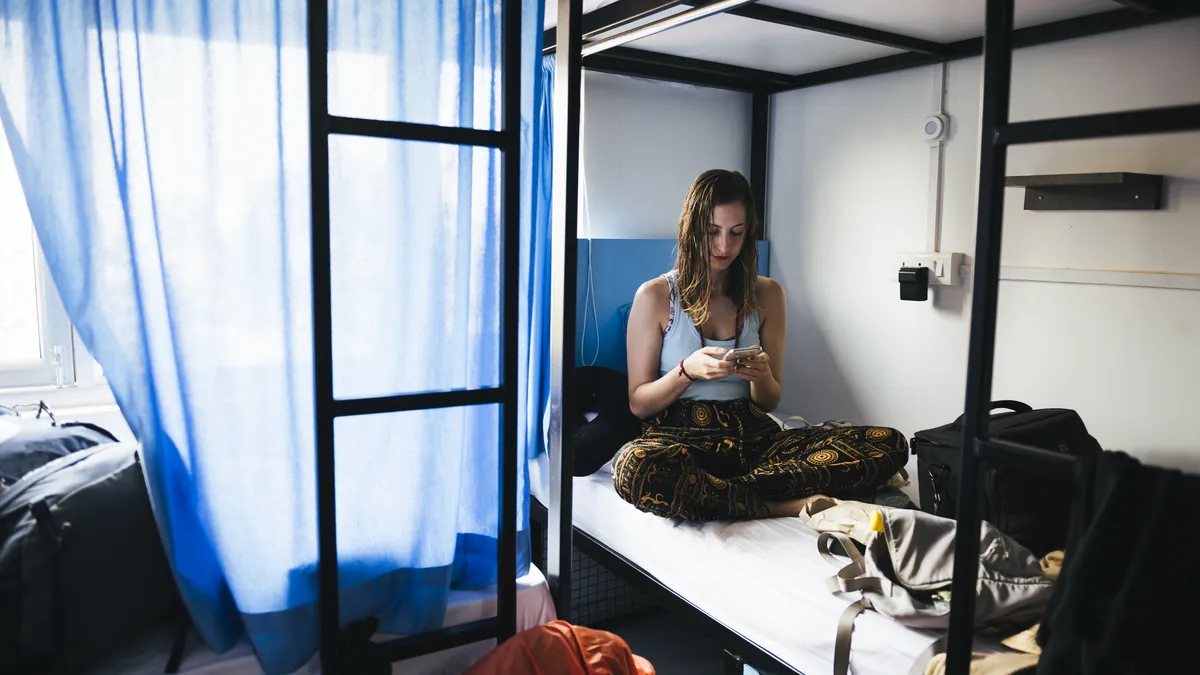
Unlike private hotel suites or standalone vacation homes, a shared hostel dormitory provides zero structural isolation. In a room housing anywhere from 4 to 18 transient travelers rotating on a daily basis, personal boundaries dissolve into shared bunk beds, communal luggage lockers, and co-ed bathroom shower stalls. Over the past decade, law enforcement agencies in major backpacking hubs across the UK, Australia, Spain, and Germany have investigated alarming cases where voyeurs—ranging from rogue long-term residents and predatory roommates to dishonest hostel maintenance staff—planted covert optical recording gear inside communal shower cubicles, hollow bed frames, and locker rooms.
This comprehensive survival guide delivers the authoritative privacy handbook for hostel travelers in 2026. We examine the unique legal rights of travelers occupying shared commercial accommodations, analyze documented police takedowns in major global backpacker hubs, dissect the primary physical concealment vectors unique to dormitory furniture and communal bathrooms, and provide a rapid, discreet 3-minute sweep protocol designed for solo travelers to verify their personal bunk space without alarming fellow roommates.
The Legal Status of Hostel Privacy: Shared Dorms vs. Communal Restrooms
To evaluate privacy violations in a hostel, travelers must understand how the law differentiates between shared sleeping quarters and fully private sanitary spaces.
1. Shared Sleeping Dormitories: A Qualified Expectation of Privacy
In common-law and civil-law jurisdictions worldwide, staying in a shared dormitory inherently reduces your expectation of visual privacy relative to fellow occupants who are physically present in the room. A roommate can see you sleeping or packing your backpack. However:
- Electronic Surveillance Remains Strictly Illegal: Reduced personal privacy does not grant anyone the legal right to plant automated electronic recording equipment. Operating a covert camera in a shared dormitory without the explicit written consent of all occupants constitutes criminal voyeurism and illegal wiretapping across all major jurisdictions.
- Hostel Management Prohibition: Reputable hostel chains and Hostelworld partner standards strictly forbid hostel management from operating security CCTV inside guest dormitories. Operational CCTV is legally restricted to main reception areas, exterior entry gates, and public social lounges.
2. Communal Bathrooms, Showers & Changing Stalls: Absolute Protected Sanctuaries
In stark contrast to sleeping dorms, communal bathrooms, private shower stalls, and changing cubicles carry an absolute, legally inviolable expectation of privacy. Regardless of whether a bathroom is located in a 5-star resort or a $12-a-night youth hostel, planting any optical lens, audio bug, or recording device inside a restroom stall is an aggravated criminal felony under federal and state voyeurism statutes worldwide (e.g., U.S. 18 U.S.C. § 1801, UK Voyeurism Offences Act, Australian Crimes Acts, and EU Penal Codes).
Review our exhaustive legal breakdown in hidden camera laws by state and country to understand your absolute rights in shared facilities.
Documented Case Studies: Landmark Hostel Spy Camera Investigations
The vulnerability of hostel guests is substantiated by formal police arrest logs and criminal court convictions across international backpacking destinations:
Case 1: The London Backpacker Hostel Communal Shower Incident
In a busy youth hostel located in central London, an Australian female solo traveler entered a shared co-ed shower cubicle. While adjusting the shower curtain, she noticed a black USB wall charger plugged into a high-level 230V electric shaver socket mounted directly beside the mirror opposite the shower glass.
Knowing that shaver sockets are intended exclusively for electric razors, she inspected the charger closely. Embedded between the USB ports was a 1.5mm pinhole camera lens angled directly toward the shower stall. She discretely unplugged the device, covered it with a towel, and walked directly to the local Metropolitan Police station in Holborn. Forensic examination of the seized 64GB MicroSD card revealed intimate video recordings of over 30 international travelers. Police arrested a 34-year-old long-term hostel resident who had booked a permanent bed for over six months. The perpetrator was prosecuted under the UK Voyeurism Offences Act, receiving a custodial prison sentence and lifetime placement on the Sex Offenders Register.
Case 2: The Sydney Working Holiday Beachside Hostel Scandal (Australia)
In a premier beachside hostel in Sydney, Australia, female backpackers on working holiday visas noticed an unusual plastic plate glued over a ceiling ventilation exhaust duct in a shared bathroom. An optical glint sweep performed with Hidden Camera Detector App revealed a distinct retroreflective optical flare through the vent louvers.
New South Wales Police detectives unbolted the ductwork and recovered a battery-powered Wi-Fi pinhole camera connected to a high-capacity lithium battery pack, broadcasting live video to an external cellular receiver. The incident led to major regulatory reviews of backpacker accommodation licensing across New South Wales.
Case 3: The Barcelona Gothic Quarter Locker Room Discovery (Spain)
In Barcelona's Gothic Quarter, a German student staying in an 8-bed mixed dormitory noticed a small black magnetic cube camera attached to the underside of a metal changing bench positioned between personal luggage lockers. The device was oriented upward toward travelers changing into swimwear before heading to the beach. Mossos d'Esquadra officers seized the camera, arresting an Italian tourist who had checked into the dorm two days prior.
Case 4: The Berlin Industrial Loft Bunk Frame Pinhole (Germany)
In an industrial-style hostel in Berlin-Friedrichshain, a traveler sleeping in a lower bunk noticed an off-color drilled hole in the hollow steel tubular corner post of the adjacent bunk bed. Pushing a small wire into the post met rigid plastic resistance. Berlin Polizei discovered a miniature endoscopic snake camera threaded down the inside of the metal frame, powered by an external USB power bank hidden inside a locked under-bed storage crate.
Comparative Architecture: Shared Backpacker Accommodations
Evaluating your privacy risk requires understanding the structural differences between various shared lodging models:
| Hostel Category | Sleeping Architecture | Bathroom Setup | Surveillance Risk Profile | Primary Concealment Targets |
|---|---|---|---|---|
| Large Mixed Dorm (8-16 Beds) | Stacked metal or wooden bunk beds; shared room key | Communal hall bathrooms with multiple stalls & showers | High in communal showers; Moderate in sleeping dorm | Shaver sockets, exhaust vents, under-bed storage lockers, hollow frame posts |
| Female-Only Dorm (4-6 Beds) | Low-density bunks; restricted keycard floor access | En-suite or dedicated keycard-accessible bathroom | Moderate; reduced foot traffic but still vulnerable to rogue keyholders | Hairdryer brackets, reading lamps, bedside charging strips |
| Modern Capsule / Pod Hostel (Tokyo/Singapore) | Enclosed modular fiberglass or MDF sleeping pods with curtains | Communal executive washrooms with individual lockable shower suites | Low inside private pods; Moderate in communal changing areas | Pod integrated ventilation fan, charging dock, luggage lockers |
| Private Hostel Room with En-Suite | Standard double/twin room inside hostel building | Dedicated private bathroom accessible only to room occupants | Low to Moderate (comparable to budget boutique hotels) | Smoke detectors, bedside clocks, desk lamps |
| University Summer Student Residence | Single or twin dormitory rooms during academic break | Shared floor communal shower and toilet blocks | Moderate; temporary maintenance contractor access | Showerhead wall plates, ceiling drop-tiles, tissue dispensers |
As the matrix demonstrates, communal shower cubicles and high-density mixed dormitories represent the primary threat surfaces. Conducting systematic sweeps using Hidden Camera Detector App ensures total personal protection.
Backpacker Concealment Hotspots: Dorms & Communal Bathrooms
Hostel environments feature unique physical fixtures where voyeurs frequently hide cameras:
1. Communal Shower Shaver Sockets & Mirrors
Communal bathrooms worldwide feature dedicated 115V/230V electric shaver outlets mounted at shoulder height near mirrors. Voyeurs plug in functional USB charger spy cameras disguised as standard black or white phone adapters, providing continuous power overlooking private shower stalls.
2. Hollow Tubular Metal Bunk Bed Frames
Commercial hostel bunk beds are fabricated from hollow square or circular steel tubing. The hollow interior provides ideal conduits for running thin micro-lens cables, with 1mm pinhole lenses peeking out through unbolted assembly screw holes.
3. Bedside USB Charging Ports & Reading Lights
Modern hostels provide individual reading lights and dual USB charging ports installed directly at the head of each bunk bed. Rogue operators modify these plastic enclosures, embedding miniature lenses looking across the bunk mattress.
4. Under-Bed Luggage Storage Cages
Metal wire or wooden storage cages slide beneath lower bunks. Perpetrators clip battery-powered micro-cube cameras to the underside of bunk slats, oriented to record travelers changing clothes beside their beds.
5. Bathroom Ceiling Drop-Tiles & Ventilation Fans
High moisture and continuous exhaust airflow make bathroom ventilation grilles and suspended ceiling tiles prime targets for elevated, wide-angle voyeuristic cameras.
The Discreet 3-Minute Backpacker Clearance Sweep
When sharing a dormitory with unfamiliar travelers, you must sweep your personal space without drawing awkward stares or provoking conflict. Execute this subtle, multi-step clearance routine:
- Minute 1: The Casual Bunk Alignment Check: Sit naturally on your assigned bunk bed. While settling in and opening your backpack, inspect the bed frame immediately surrounding your pillow. Feel the tubular metal posts with your fingers. Check your personal reading lamp and USB charging socket for unaligned plastic seams or tiny 1mm apertures.
- Minute 2: The Communal Shower Cubicle Sweep: Walk into the shower stall before disrobing. Inspect the walls, ceiling vent, and adjacent mirror. Check all electrical shaver outlets—if an unowned USB charging block is plugged into a wall socket in an empty bathroom, treat it as an active threat.
- Minute 3: The Phone-Level Glint & Infrared Check: Hold your smartphone naturally as if texting. Launch the optical glint detection tool in Hidden Camera Detector App. Pan across the ceiling vent, shower door frame, and storage lockers. In a dimmed room, look for retroreflective optical flares and active 940nm infrared night-vision beacons on your screen.
Emergency Response in a Hostel: What to Do If You Find a Camera
Discovering a hidden camera in a hostel demands tactical discretion to prevent the perpetrator from destroying evidence or confronting you:
- Do Not Announce Your Discovery in the Dorm: Never scream or announce to your roommates that you found a camera. The perpetrator may be resting in a bunk three feet away and could seize the device or wipe remote recordings before police arrive.
- Preserve the Hardware & Obscure the View: Place an opaque piece of tape, a sticker, or a towel over the camera lens without unplugging it or smudging latent fingerprints.
- Record Timestamped Video Evidence: Discreetly film continuous video showing the exact location of the device, its orientation, and close-ups of the optical lens aperture.
- Quietly Collect Your Belongings & Exit: Pack your essential passport, wallet, and daypack. Walk downstairs to the main reception desk.
- Involve General Management & Dial Emergency Police: Request a private conversation with the General Manager in an administrative office. Inform them of the discovery and dial local police immediately (e.g., 999 in the UK, 000 in Australia, 112 in Europe, 911 in the USA).
- File a Formal Hostelworld Trust & Safety Incident: Contact Hostelworld customer support to freeze your booking, process an immediate 100% full refund, and demand compensation for emergency hotel lodging.
For complete legal procedures, consult our dedicated handbook on what to do if you find a hidden camera.
Frequently Asked Questions About Hostel Hidden Camera Sweeps
Can hostel owners put security cameras inside shared dorm rooms?
No. Under international hospitality regulations and privacy laws worldwide, hostel owners and staff are strictly forbidden from installing surveillance cameras inside guest dormitories, bedrooms, or bathrooms. Security CCTV is legally restricted to public hallways, staircases, reception lobbies, and exterior building perimeters.
What should I do if I see an unknown USB charger plugged into a communal bathroom wall?
Treat it as an active threat. Do not leave it uninspected. Inspect the face between the USB ports for a microscopic optical glass lens. If a lens is present, immediately notify hostel management and local police dispatch.
Will Hostelworld refund my booking if a camera is found in my hostel?
Yes. Hostelworld maintains a zero-tolerance policy regarding safety and privacy violations. If an illegal recording device is verified, Hostelworld will issue an immediate 100% full refund of all booking deposits and service charges, and assist in securing alternative accredited hotel lodging.
How can I change clothes privately in a shared dorm room?
Use the private, lockable bathroom changing cubicles rather than changing out in the open in a mixed dormitory. If changing inside the dorm, utilize a lower bunk equipped with 360-degree privacy curtains, or change inside your sleeping bag.
Can smartphone detector apps find cameras hidden inside metal bed frames?
Yes. Even if a camera body is hidden inside steel tubing, the optical glass lens must remain exposed through a hole to capture video. The optical glint scanner in Hidden Camera Detector App reflects light off the curved lens elements, pinpointing the opening immediately.
What is the emergency telephone number for police in Australia?
In Australia, the national emergency telephone number for police, ambulance, and fire rescue is 000 (Triple Zero). Calls to 000 are free from all mobile phones and payphones.
Can an offline spy camera record in the dark in a hostel dorm?
Yes, if equipped with infrared night-vision LEDs. However, active night-vision illuminators emit light in the 850nm or 940nm spectrum that glows brightly when viewed through your smartphone's front selfie camera or Hidden Camera Detector App.
What should I do if a hostel roommate acts suspiciously when I inspect my bunk?
If a roommate becomes defensive, nervous, or confrontational when you casually check your bed or outlets, do not escalate the situation. Gather your valuables, step out of the room to common areas, and speak with front-desk management immediately.
Hostel Wi-Fi Network Forensics: Detecting Cameras in High-Density Environments
Unlike private residential rentals with 5 to 10 connected devices, a typical youth hostel network is a chaotic, high-density environment where 50 to 200 smartphones, laptops, and tablets compete for bandwidth across multiple shared access points. Operating a network audit in this environment requires specialized filtering techniques.
When you launch the local network scanner in Hidden Camera Detector App on a hostel Wi-Fi network, you must cut through the digital noise of fellow travelers' iPhones and Android devices. Apply these forensic network filtering criteria to pinpoint rogue surveillance hardware:
- Filter by Hardware Manufacturer (OUI Analysis): Over 95% of travelers' devices report MAC addresses from Apple, Samsung, Google, Dell, or Lenovo. Filter your scan results to isolate micro-controller vendors commonly used in spy hardware: Hangzhou Tuya, Espressif Systems (ESP32/ESP8266), Shenzhen Bilian, or Allwinner Technology.
- Identify Unauthenticated Port 554 RTSP Streams: In cheap consumer spy cameras, firmware is engineered for zero-configuration setup, leaving Real-Time Streaming Protocol (RTSP) port 554 open without password authentication. Scanning the subnet for open Port 554 endpoints reveals cameras broadcasting real-time video across the local hostel network.
- Detect Asymmetric Continuous Uplink Bandwidth: A smartphone or tablet browsing social media exhibits bursty, intermittent bandwidth usage. In contrast, an active covert IP camera streaming live H.264/H.265 video to a remote server draws a continuous, unbroken 1.5 Mbps to 3.0 Mbps upload stream 24 hours a day.
The Engineering of Endoscopic Snake Cameras in Dormitory Bed Frames
One of the most concerning hardware vectors investigated by police in youth hostels is the deployment of industrial endoscopic snake cameras (borescopes). Originally designed for automotive engine inspection and plumbing diagnostics, these devices cost under $25 on consumer e-commerce platforms and feature semi-rigid, flexible cables measuring 2 to 10 meters in length.
The camera head itself measures only 3.9mm to 5.5mm in diameter, housing a miniature CMOS image sensor surrounded by adjustable LED micro-diodes. Voyeurs thread these thin cables through hollow steel bunk bed tubes, air conditioning ductwork, or under-floor conduit chases, terminating the cable in a USB-connected laptop, power bank, or Android smartphone hidden inside a locked personal backpack.
To detect an endoscopic camera hidden inside hollow furniture:
- Inspect Assembly Bolt Holes: Bunk bed frames feature pre-drilled holes for adjustable shelf heights and ladder rungs. Look into unused holes with a flashlight; genuine bolt holes reveal hollow metal or paint, while an endoscopic camera presents a dark glass circle resting flush with the hole perimeter.
- Execute Coaxial Optical Glint Sweeps: The curved glass elements in an endoscopic sensor return an intense retroreflective glint when swept with the coaxial flash in Hidden Camera Detector App.
- Tactile Cable Tracing: Run your fingers along the backside of metal bed rails and under mattress support slats. Unofficial zip-ties, taped wires, or thin black cables running along structural tubes indicate unauthorized aftermarket wiring.
Country-by-Country Legal Matrix: Backpacker Voyeurism Penalties Across 6 Nations
Understanding the statutory penalties confronting voyeurs in premier backpacking destinations empowers travelers to demand swift law enforcement intervention:
| Country | Governing Legal Statute | Maximum Custodial Sentence | Maximum Fines | Legal Protections in Shared Lodging |
|---|---|---|---|---|
| United Kingdom | Voyeurism Offences Act 2019 / Sexual Offences Act 2003 | Up to 2 years imprisonment | Unlimited criminal fines in Crown Court | Absolute criminal liability in shared washrooms and dormitories; mandatory sex offender registration |
| Australia | Crimes Act 1900 (NSW) § 91L & Equivalent State Codes | Up to 5 years imprisonment | Heavy statutory monetary penalties | Aggravated felony for recording without consent in shared commercial accommodations |
| New Zealand | Crimes Act 1961 Section 216H (Intimate Visual Recording) | Up to 3 years imprisonment | Statutory criminal restitution awards | Strict liability for recording in hostel bathrooms, dorms, and communal changing areas |
| Thailand | Thai Penal Code Section 397 (Sexual Harassment & Voyeurism) | Up to 5 years imprisonment | Up to 100,000 Thai Baht | Dedicated Royal Thai Tourist Police Division (Dial 1155) with English-speaking officers |
| Spain | Spanish Penal Code Article 197 (Descubrimiento y Revelación) | 1 to 4 years (2 to 5 years if broadcast online) | Proportional daily fine quotas (multas) | Immediate closure of offending commercial tourist license and criminal asset seizure |
| Germany | German Criminal Code § 201a StGB (Verletzung des Intimbereichs) | Up to 2 years imprisonment | Proportional day-fines based on net income | Mandatory judicial confiscation of all electronic recording hardware and media |
Pre-Booking Due Diligence: 10 Red Flags in Hostelworld Listings
Scrutinize hostel listings on Hostelworld and Booking.com for these critical operational warning signs before confirming a reservation:
- Absence of Individual Bunk Privacy Curtains: In high-density mixed dormitories, choose hostels that provide 360-degree privacy curtains, individual reading lights, and enclosed pod structures that physically block sightlines from opposite bunks.
- Lack of In-Room Lockable Luggage Storage: If a hostel listing does not explicitly advertise personal, padlock-compatible lockers located inside the dormitory, your belongings and personal privacy are severely compromised.
- Single Co-Ed Bathroom for Large Dormitories: Dormitories housing 10 or more guests that share a single non-gender-segregated bathroom create severe privacy bottlenecks and elevated vulnerability to unmonitored hardware installations.
- Low Security Scores in Verified Traveler Reviews: Filter Hostelworld reviews by 'Security' score. Avoid any property with a security rating below 8.0/10.
- Mention of 'Permanent Residents' or 'Long-Term Tenants': Hostels that mix transient international backpackers with long-term residents living on permanent weekly rates exhibit higher statistical incidence of illicit personal hardware setups.
- Vague Photos of Washroom and Shower Facilities: Listings that showcase vibrant rooftop bars and common lounges while completely omitting photographs of actual shower stalls and toilet blocks should be treated with caution.
- Lack of 24-Hour Front-Desk Staff: Small hostels that operate without overnight front-desk staff leave dormitories unmonitored during late-night hours.
- Absence of Electronic RFID Keycard Dorm Locks: Properties relying on traditional brass keys that can be easily duplicated by former guests lack audit trail capabilities.
- Negative Reviews Citing 'Creepy Atmosphere' or 'Strange Staff': Scrutinize 1-star and 2-star reviews for recurring complaints regarding unauthorized staff entry into dorms.
- Excessively Cheap Rates Compared to Local Market: Properties offering dramatically undercut rates frequently cut costs by eliminating security staff, background checks, and professional maintenance.
The Backpacker's Essential 5-Tool Privacy Kit
Experienced global travelers pack these lightweight, compact privacy tools in their daypacks:
| Defensive Tool | Hardware Specification | Primary Tactical Purpose | Field Deployment Protocol |
|---|---|---|---|
| Optical Detector App | Hidden Camera Detector App | Coaxial retroreflective lens glint detection | Run 60-second sweep of your bunk bed and bathroom shower stall immediately upon arrival |
| High-CRI LED Penlight | Compact 100+ lumen pocket torch | Two-way mirror penetration & dark vent sweeps | Press flush against mirrors in communal washrooms and illuminate deep ceiling louvers |
| Heavy-Duty Padlock with Shielded Shackle | Abus or Master Lock brass padlock (not TSA) | Securing under-bed storage lockers | Lock all electronics, passports, and personal items whenever stepping out of the dorm |
| Opaque Privacy Vinyl Dots | Matte black removable adhesive stickers | Zero-damage optical blinding of pinholes | Apply directly over suspicious shaver sockets, clock faces, or unverified vent holes |
| Compact Travel Door Wedge | Rubber or aluminum door stop alarm | Preventing physical intrusion in private shower stalls | Wedge beneath the door of private bathroom cubicles to prevent anyone from opening the latch |
By incorporating these disciplined security habits and deploying Hidden Camera Detector App, backpackers can embrace the thrill of budget global exploration while maintaining total personal dignity and privacy.
Additional Backpacker FAQs: Navigating Dormitory Safety
Can someone hack my phone over open hostel Wi-Fi to watch my camera?
While open Wi-Fi allows packet sniffing of unencrypted network traffic, modern iOS and Android operating systems feature hardware-level camera sandboxing and visual indicator dots (green/orange dots) in the status bar whenever the camera or microphone is accessed. An attacker on the local Wi-Fi cannot silently hijack your smartphone's camera without triggering operating system warnings.
What should I do if a hostel manager refuses to refund my money after finding a camera?
Do not argue with on-site staff. Preserve your police incident report number, photograph the discovered device, and contact Hostelworld customer support directly through their urgent safety escalation portal. In addition, contact your credit card issuer (Visa, Mastercard, Amex) to initiate a full chargeback under the category of 'Fraudulent & Unlawful Service Delivery'.
Are female-only dorms safer from hidden cameras than mixed dorms?
Statistically, female-only dormitories experience lower rates of illicit surveillance planted by roommates. However, female dorms remain vulnerable to predatory maintenance staff or former guests who retained access to master keys. Conducting a rapid 3-minute sweep of female dorms remains an essential safety habit.
How do I safely document a hidden camera in a hostel without being noticed?
Hold your smartphone naturally as if making a phone call or recording a casual travel video blog of your bunk area. Smoothly pan across the room and zoom in on the concealed device, ensuring the timestamp, room number, and lens aperture are clearly captured on video.
CMOS Sensor PWM Banding: Discriminating Active Electronics in Dorms
In a crowded hostel dormitory, travelers encounter dozens of confusing ambient reflections: metal locker handles, chrome bed ladders, aluminum water bottles, and glass picture frames. How does a backpacker definitively differentiate between an innocent reflection and an active covert camera sensor in seconds?
The answer lies in pulse-width modulation (PWM) frequency discrimination and CMOS rolling shutter mechanics. Covert camera modules and active night-vision LED drivers oscillate at high frequencies (typically 120Hz to 1,000Hz) to regulate voltage and manage heat inside confined plastic casings. Passive metallic surfaces, by contrast, reflect light continuously with zero modulation.
When you observe a suspicious spot through the camera viewfinder in Hidden Camera Detector App, the smartphone's electronic rolling shutter reads out charge row-by-row sequentially across the sensor array. If the light source is an active electronic emitter oscillating at high frequency, the temporal pulsing produces distinct, rhythmic horizontal light-and-dark banding patterns across your screen. Specular reflections from passive metal screws or polished bed frames remain completely solid and flicker-free. The presence of horizontal rolling shutter ripples confirms an active, powered semiconductor circuit.
Latin American Backpacker Lodges: Case Studies from Peru & Colombia
While European and Australian hostel investigations receive significant media coverage, backpacker lodges across South America present unique physical security considerations. In popular trekking and surfing destinations such as Cusco, Peru, and Medellin, Colombia, rustic eco-lodges frequently feature adobe walls, reclaimed timber furnishings, and shared outdoor courtyard showers.
The Cusco Historic Center Trekker Lodge Incident
In Cusco, Peru, international trekkers preparing for the Inca Trail rented bunks in an historic colonial-era hostel. A Canadian hiker noticed an anomalous hole drilled into the decorative wooden crucifix hanging in the communal hallway directly opposite the co-ed shower door. Inspecting the fixture with a pocket flashlight revealed an active optical pinhole camera wired to a high-capacity lithium battery bank hidden inside the hollow hollowed-out back of the religious carving.
The traveler contacted the Peruvian Tourist Police (Policía de Turismo - POLTUR). Officers seized the hardware and arrested a night-shift hostel employee who possessed master keys to all dormitory lockers. The incident demonstrated that even cultural and religious decor can be cynically repurposed for illicit voyeurism, underscoring the universal necessity of independent verification.
Psychological Resilience & Peer Solidarity: Preserving the Backpacker Spirit
The psychological violation of discovering a hidden camera in a communal living environment is intensified by the feeling of social betrayal. Backpacker culture is built on mutual vulnerability and global fellowship; discovering an illicit recording device can breed toxic cynicism and isolation.
To protect your mental health while continuing your travels:
- Separate Bad Actors from the Travel Community: Recognize that the actions of a single criminal perpetrator do not reflect the hundreds of kind, authentic, and inspiring travelers you will meet on your journey.
- Build Peer Solidarity: If you discover an unauthorized device, discreetly confide in trusted fellow travelers outside the dormitory. Cooperative action strengthens evidence gathering, provides emotional support, and ensures hostel management cannot sweep the incident under the rug.
- Establish Verifiable Boundaries: Adopting a disciplined 3-minute sweep routine with Hidden Camera Detector App replaces anxiety with calm, objective control. Once your bunk is verified, you can fully relax and immerse yourself in the adventure.
Final Backpacker Field FAQs
What should I do if a hostel roommate refuses to let me inspect an outlet near my bunk?
You have the absolute right to inspect any electrical outlet or fixture located within your assigned personal bunk space. If a roommate aggressively blocks you or acts defensively, do not escalate into a physical argument. Step outside the dorm immediately and request hostel front-desk management to conduct an official inspection alongside you.
How can I tell if a shower mirror in a hostel is two-way glass?
Execute the classic fingernail gap test: place your nail directly against the reflective surface. On a safe second-surface mirror, there is a visible 1/8-inch gap between your nail and its reflection. If there is zero gap (your nail touches its reflection directly), it is a first-surface or two-way mirror. Additionally, press your phone flashlight flush against the glass in a dark stall to see if an observation room exists behind the mirror.
Are USB wall charging stations provided at hostel beds safe?
While most bedside USB ports are legitimate power supplies, they carry two risks: hidden pinhole cameras embedded in the plastic bezel, and 'juice-jacking' (data theft via USB data pins). Always inspect the face of the charging block with Hidden Camera Detector App, and use a dedicated USB Data Blocker ('power condom') when connecting your personal phone to unverified public USB outlets.
What is the emergency telephone number for police in New Zealand?
In New Zealand, the national emergency number for police, fire, and ambulance is 111. For non-emergency reporting of past incidents, travelers can dial 105.
The Backpacker Emergency Relocation Protocol: Safe Evacuation
If you uncover an illicit recording device inside a youth hostel in the middle of the night, your physical personal safety takes immediate precedence over property negotiations. Do not attempt to pack large luggage items in front of suspicious roommates; instead, prioritize your passport, mobile phone, credit cards, and essential medications.
Quietly exit the dormitory, walk past the reception desk directly to the street outside, and immediately order a licensed rideshare or taxi to a branded 24-hour hotel lobby (such as an Ibis, Holiday Inn Express, or Premier Inn) or an open transit hub. Once in a secure, well-lit public space with staff present, contact emergency police dispatch and file your formal complaint.
Will travel insurance cover emergency hotel costs if I leave a compromised hostel?
Yes. Comprehensive travel insurance policies (such as World Nomads, Allianz Global Assistance, or SafetyWing) frequently include coverage for Emergency Trip Interruption and Accommodation Curtailment due to criminal incidents on the property. To ensure your claim is approved, you must obtain a written police report number and retain all emergency hotel and taxi receipts.
Every backpacker deserves to travel the world with complete confidence, knowing their personal privacy and bodily integrity are rigorously protected. Equip your smartphone with Hidden Camera Detector App, maintain clear situational awareness, and embrace the adventure of global travel with total peace of mind.
Youth hostels provide incredible opportunities to build lifelong global friendships, explore historic destinations on a budget, and immerse yourself in vibrant local cultures. Never allow the illicit actions of bad actors to extinguish your passion for international exploration. By establishing a brief, disciplined 3-minute sweep routine upon checking into each new dormitory, you actively protect yourself, support your fellow travelers, and preserve the genuine spirit of open, safe backpacker community across the globe.
Equip your smartphone with cutting-edge privacy intelligence, verify your private spaces thoroughly, and explore the world with absolute courage and uncompromising peace of mind.
Hotel & Airbnb Privacy Safety Score Assessment
Complete this interactive 5-point inspection checklist to evaluate your room's surveillance risk index.