
Most people who practice 16:8 intermittent fasting adopt a late schedule: skipping breakfast, eating their first meal at 1:00 PM, and finishing dinner around 9:00 PM. While this fits modern social life, chronobiologists and metabolic researchers have discovered that shifting your window earlier produces radically superior physiological outcomes.
Executive Summary & Research Finding
Is early intermittent fasting better than skipping breakfast? Review circadian biology research on eTRF, melatonin, late-night insulin resistance, and deep sleep.
This protocol is known as Early Time-Restricted Feeding (eTRF): consuming meals between 8:00 AM and 4:00 PM or 9:00 AM and 5:00 PM. Groundbreaking clinical trials led by the Salk Institute for Biological Studies (Dr. Satchin Panda) and published in Cell Metabolism reveal that our internal organs follow strict circadian clock genes that make us metabolically efficient by day and insulin-resistant by night.
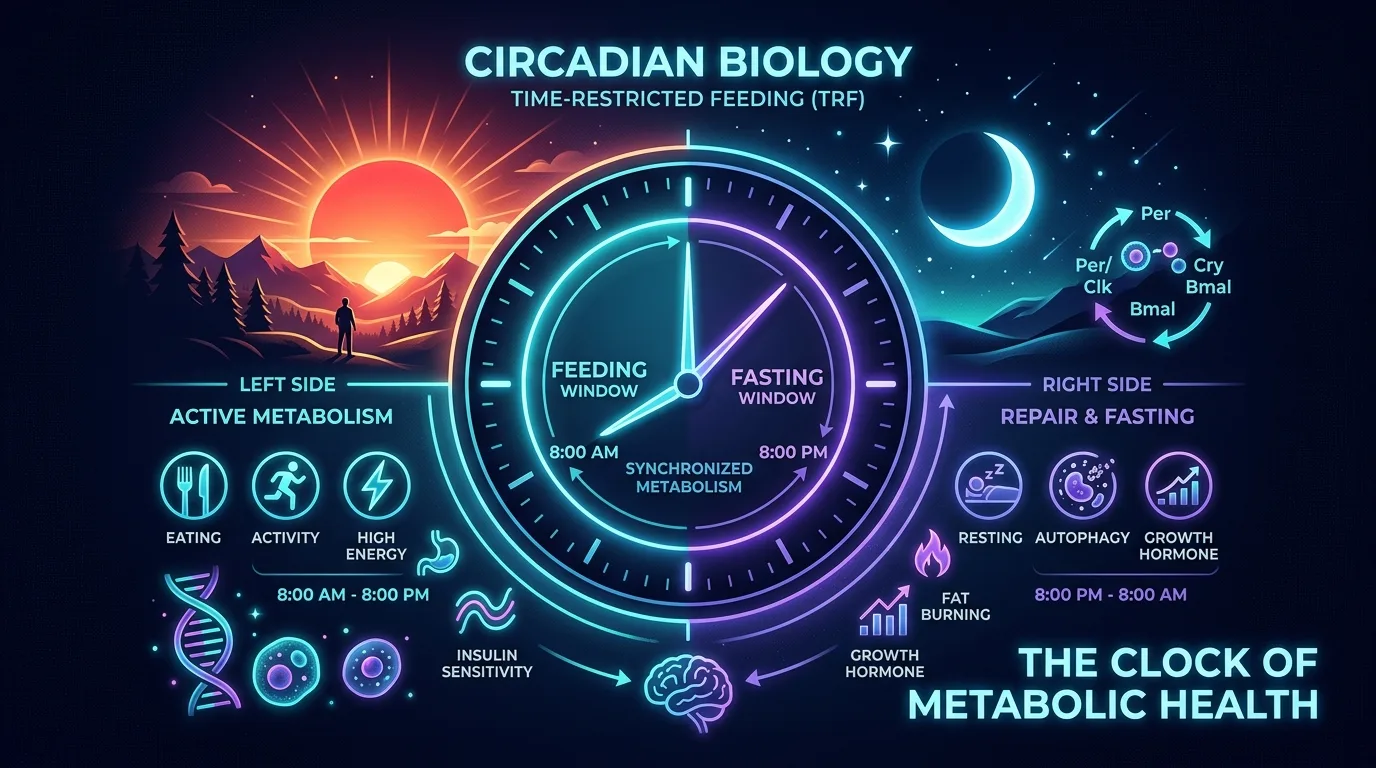
The Conflict Between Melatonin and Insulin
As the sun sets, your pineal gland begins secreting melatonin to prepare your brain for sleep. At the same time, pancreatic beta cells express melatonin receptors (MT1 and MT2). When melatonin binds to these receptors, it actively suppresses insulin secretion.
Eating a heavy meal at 8:30 PM forces your digestive tract to handle glucose when your pancreas is biologically offline, resulting in prolonged blood sugar spikes, elevated triglycerides, and suppressed growth hormone release during the night.
Clinical Outcomes: Early Fasting vs Standard Late Fasting
| Metabolic Parameter | Early Window (8 AM - 4 PM) | Late Window (1 PM - 9 PM) | Physiological Mechanism |
|---|---|---|---|
| Insulin Sensitivity | +34% Improvement | Baseline / Moderate | Synchronized with peak daytime cortisol & GLUT4 |
| Systolic Blood Pressure | -11 mm Hg Reduction | -4 mm Hg Reduction | Lower nocturnal vascular resistance |
| Deep Slow-Wave Sleep | +22% Increase | Fragmented / Delayed | Core body temperature cools down rapidly |
| Evening Appetite (Ghrelin) | Significantly Reduced | Elevated late-night cravings | Leptin receptor sensitivity restored by bedtime |
How to Transition to an Early Fasting Window
- Shift Gradually: Do not jump from a 9:00 PM dinner to a 4:00 PM cutoff overnight. Pull your dinner forward by 45 minutes every three days.
- Prioritize Morning Protein: Consume 35 to 45 grams of protein with your first meal at 8:30 AM to trigger satiety peptide YY (PYY) and stabilize energy.
- Make Dinner Light: Finish your last meal by 5:00 PM with easily digestible lean proteins and fibrous vegetables.
Circadian Night Routine Rule
Allow at least 3 to 4 full hours between your final calorie intake and going to sleep. This ensures your stomach empties completely, eliminating acid reflux and maximizing overnight heart rate variability (HRV).
Align Your Fasting Schedule with Precision
With Simple Free Intermittent Fasting Tracker, you can configure custom eTRF and 16:8 schedules, receive gentle notifications when your eating window opens and closes, and visualize your daily metabolic stages.
Fasting & Autophagy Timeline Calculator
Input the time you finished your last meal to see exact cellular milestones and peak autophagy hours for your schedule.
Daily Water Intake & Electrolyte Fluid Calculator
Calculate optimal daily hydration volume tailored to your body weight, workout expenditure, and fasting state.