When commercial manufacturers design covert surveillance devices, they prioritize one overwhelming feature: continuous electrical power. A battery-powered camera will die after 4 to 8 hours of continuous video recording. To stream live footage 24/7 without requiring maintenance, voyeurs disguise recording hardware inside everyday appliances permanently connected to mains electricity.
Executive Summary & Research Finding
Visual spotting guide for spy cameras hidden in smoke detectors, USB wall chargers, and alarm clocks. Learn telltale physical signs, lens holes, and detection tools.
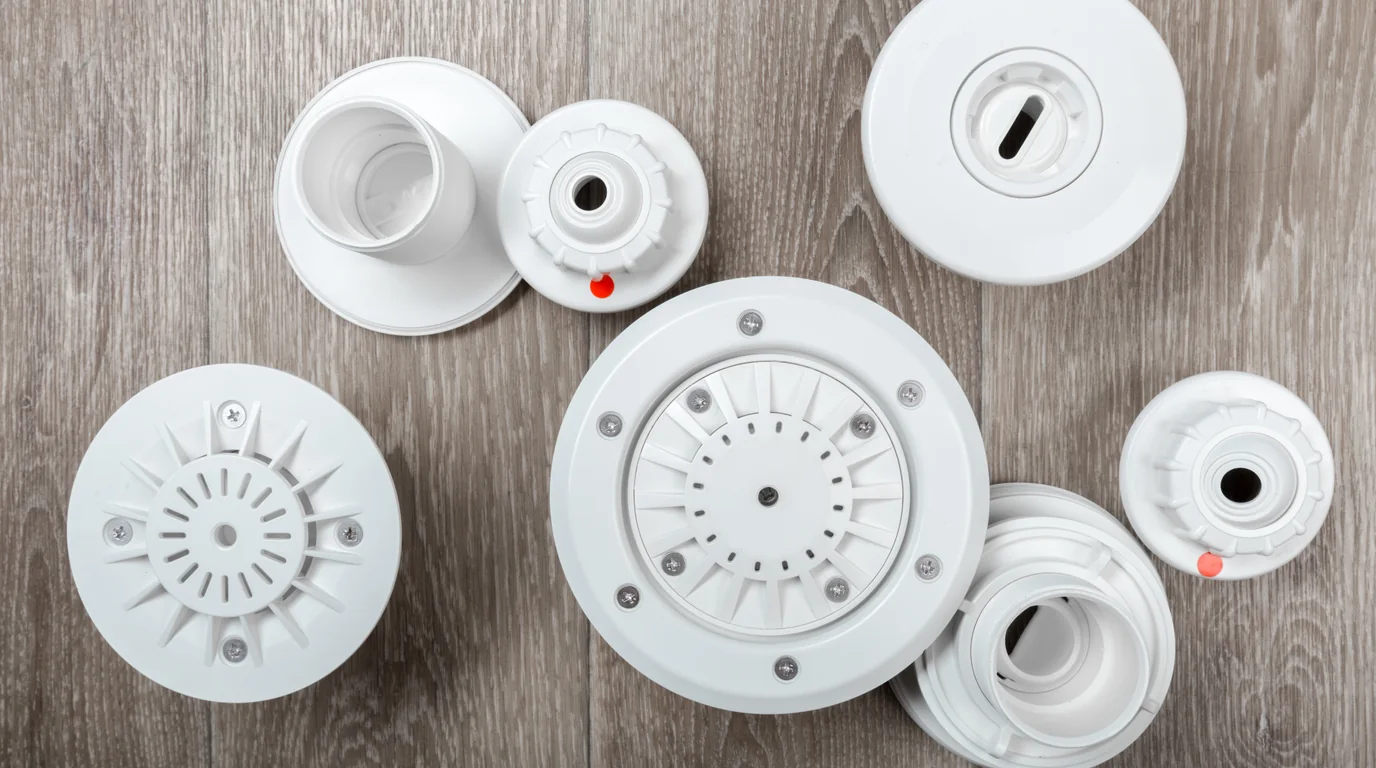
Across verified incidents reported to short-term rental platforms, three fixtures account for more than 75% of all recovered spy gadgets: ceiling smoke detectors, USB wall chargers, and digital bedside alarm clocks. Here is the engineering breakdown of how these devices look, why they are chosen, and the telltale physical flaws that give them away.
1. The Smoke Detector Spy Camera
Smoke alarms represent the ultimate vantage point for illicit recording: mounted directly overhead, they command a panoramic, unobstructed view of the entire room, bed, and changing area. While legitimate smoke alarms contain ionization chambers or optical photoelectric sensors, spy smoke alarms conceal wide-angle fisheye pinholes.
- Telltale Sign 1: Pinhole Aperture in the Side Casing: Genuine smoke alarms have open vents for airflow, but they never have a clean, polished 1mm circular hole drilled through solid plastic facing the bed.
- Telltale Sign 2: Non-Standard Indicator LEDs: Most standard home alarms pulse a single red or green LED once every 30 to 60 seconds. Spy alarms often feature solid glowing LEDs or blue status lights indicating Wi-Fi connectivity.
- Telltale Sign 3: Missing Test Button Functionality: When you press the central 'TEST' button on a real alarm, it emits an immediate, piercing 85dB alarm tone. Spy alarms frequently have a dummy test button that does nothing or feels spongy.
- Telltale Sign 4: MicroSD Card Slot: Inspect the perimeter seam of the plastic casing. A legitimate smoke detector never features a MicroSD slot or USB-C port along its rim.
2. The Bedside USB Wall Charger Camera
USB wall adapter cameras are readily available online for under $35. They look identical to standard 5V/2A phone charging bricks, plug directly into wall sockets near nightstands or desks, and even charge connected phones while covertly recording 1080p video.
- Telltale Sign 1: Dark Glass Dot Between USB Ports: Examine the front plastic face. Between the USB-A port and the outer casing, look for an unnatural black circular dot measuring 1mm to 2mm.
- Telltale Sign 2: Excessive Heat When Idle: Standard phone chargers remain cool when no cable is attached. A spy charger running an on-device Wi-Fi transceiver and video encoder runs distinctly warm (38°C to 45°C) even with nothing plugged into it.
- Telltale Sign 3: Weight Imbalance: An authentic lightweight USB brick weighs 30 to 45 grams. A spy charger containing internal heatsinks, MicroSD card slots, and camera sensors typically weighs 60 to 80 grams.
3. The Digital Bedside Alarm Clock Camera
Bedside clock radios offer an ideal disguise: placed at mattress height just 2 feet from where guests sleep. Spy clock radios feature a semi-reflective acrylic faceplate that displays green or blue digital time digits while concealing a lens behind the darkened glass.
How to verify a bedside clock: Unplug the clock and lift it directly in front of your eyes. Shine your smartphone flashlight directly against the mirrored front glass at an angle. The bright beam penetrates the smoked acrylic, immediately revealing the circular silhouette of the lens module and its circuit board.
Quick Diagnostic Comparison Table
| Device Housing | Normal Component | Spy Camera Indicator | Quick Verification Method |
|---|---|---|---|
| Smoke Detector | Uniform mesh vent with test button | Extra 1mm drilled hole facing bed | Press test button (should sound piercing alarm) |
| USB Wall Adapter | Clean solid plastic faceplate | Dark glass dot above or below USB slot | Inspect face with flashlight; feel for unusual heat |
| Digital Alarm Clock | Opaque display housing | Pinhole visible behind smoked acrylic | Shine flashlight directly through front clock glass |
| AC Power Outlet | Standard screws and plug sockets | Unusual dark lens in central screw hole | Inspect screw head centers with flashlight glint |
| Wall Air Freshener | Plastic casing with scent vent | Extra lens hole adjacent to spray nozzle | Open front flap or inspect nozzle housing |
Automate Your Inspection with Hidden Camera Detector
Rather than inspecting every ceiling fixture manually with a step stool, launch Hidden Camera Detector App. Its integrated Wi-Fi scanner interrogates your local network for connected camera chips, while the magnetic sensor flags unshielded step-down transformers inside bedside electronics with zero guesswork.
Frequently Asked Questions
Can I simply unplug suspicious devices in a vacation rental?
Yes! If an alarm clock, USB charger, or power strip looks suspicious, unplug it immediately and place it face down inside a drawer. For smoke detectors, never disable genuine safety alarms, but place a small sticky note or adhesive bandage over suspicious pinhole openings.
Will covering a hidden camera alert the host?
If the camera streams live video over Wi-Fi, the host will see their video feed turn dark. However, your personal privacy and dignity always take precedence over a host's surveillance feed.
Hotel & Airbnb Privacy Safety Score Assessment
Complete this interactive 5-point inspection checklist to evaluate your room's surveillance risk index.