
Following a meal rich in carbohydrates, blood glucose concentrations surge within 30 to 60 minutes. In a sedentary state, the pancreas must pump large amounts of insulin into circulation to force excess glucose into liver and fat cells, frequently resulting in a post-meal 'food coma' and lethargy.
Executive Summary & Research Finding
Why walk after eating? Learn how a 10-minute post-meal walk lowers blood sugar spikes by 30%, clears triglycerides, and accelerates daily fat loss.
However, clinical studies published in Diabetologia (European Association for the Study of Diabetes) and the American Diabetes Association (ADA) demonstrate that taking a gentle 10 to 15-minute walk immediately after eating reduces peak blood glucose spikes by up to 35 percent.
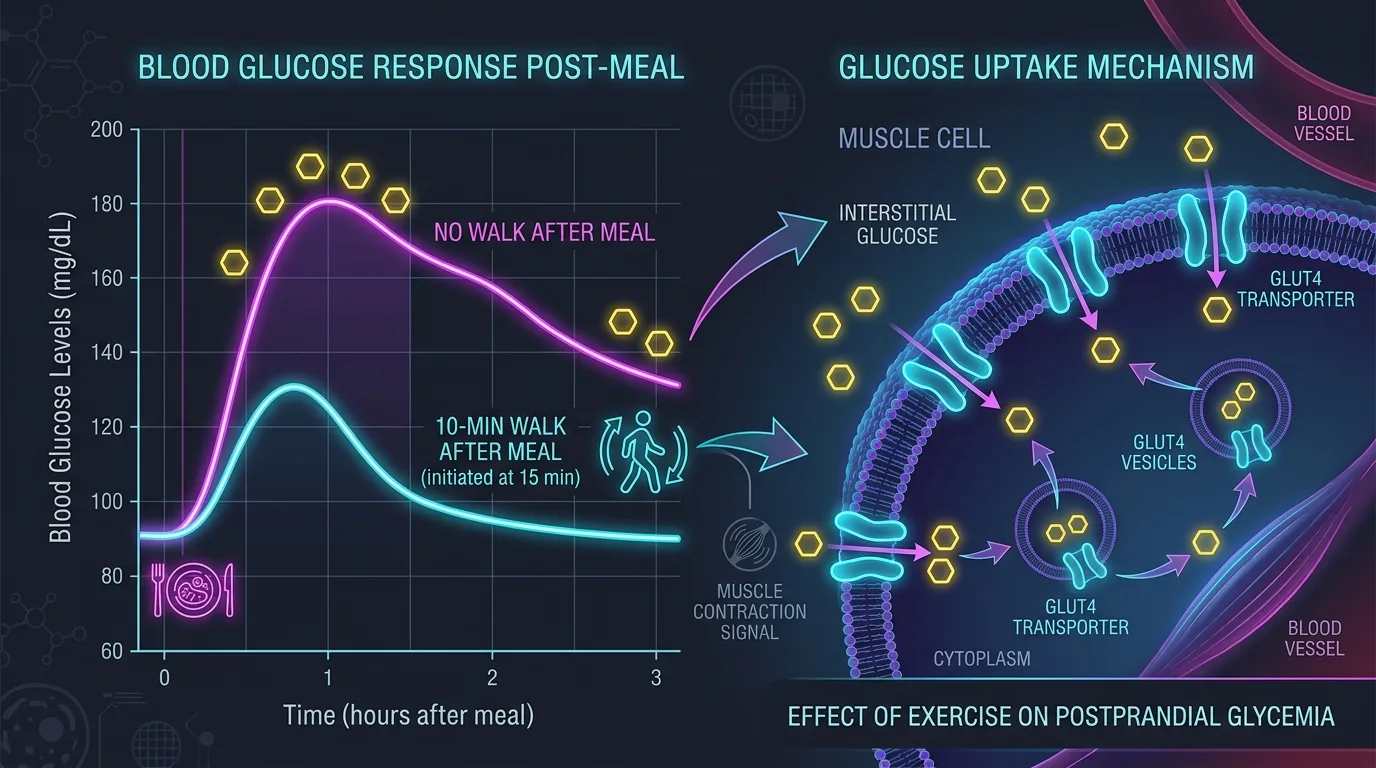
The GLUT4 Translocation Mechanism
When you are resting, glucose cannot enter muscle cells without insulin unlocking cellular doors. But when leg muscles (quadriceps, hamstrings, and calves) contract rhythmically during walking, intracellular calcium and AMPK signal GLUT4 glucose transporter vesicles to move directly to the cell membrane.
This allows your working muscles to soak up circulating blood glucose as immediate fuel completely independent of insulin. Less circulating insulin means your body stays in a fat-burning state much longer throughout the day.
Sedentary Rest vs 10-Minute Post-Meal Walk
| Parameter | Sitting After Meal (Sedentary) | 10-15 Min Walk (Active) | Clinical Benefit |
|---|---|---|---|
| Peak Glucose Surge | +60 to +90 mg/dL spike | +25 to +40 mg/dL moderate rise | Protects vascular endothelial lining from glycation |
| Pancreatic Insulin Output | Maximum surge required | Up to 30% lower insulin demand | Prevents reactive hypoglycemia (post-lunch crash) |
| Gastric Emptying Rate | Slow (Prone to reflux/bloating) | Optimal peristaltic motility | Eliminates indigestion and heavy stomach feeling |
| Daily Step Accumulation | 0 additional steps | 1,200 to 1,800 steps per walk | Easily adds 4,500 steps across three daily meals |
The 'Three 10-Minute Walks' Rule
Instead of struggling to find 60 consecutive minutes for exercise, break your physical activity into three micro-walks immediately following breakfast, lunch, and dinner. This habit accumulates 4,000 to 5,000 steps daily while providing continuous glycemic stabilization.
Timing Is Everything
Start walking within 15 to 30 minutes after taking your last bite. Waiting two hours after eating misses the critical postprandial glucose peak.
Turn Daily Steps into a Fun Social Habit
With StepLeague: Pedometer & Walking App, you can track every post-meal walk automatically, climb weekly leaderboard divisions with friends, and hit the 10,000-step longevity target effortlessly.
Zone 2 & Heart Rate Zones Calculator (Karvonen & Tanaka Formula)
Calculate your clinical maximum heart rate, Heart Rate Reserve (HRR), and precise BPM ranges for maximum mitochondrial fat oxidation.
All 5 Cardiovascular Training Zones:
Steps to Calories, Distance & Fat Burn Calculator
Estimate exact energy expenditure, walking distance, and Zone 2 fat oxidation based on your steps.
Steps & Distance Needed to Burn Target Calories / Fat
Input your desired calorie deficit or target grams of pure body fat to calculate the exact steps, kilometers, and walking duration required.
Body Mass Index (BMI) & Healthy Weight Calculator
Calculate your clinical Body Mass Index and healthy weight bracket according to World Health Organization (WHO) standards.

