For decades, affirmations were dismissed by skeptics as wishful thinking or pop-psychology slogans. However, advancements in functional Magnetic Resonance Imaging (fMRI) and cognitive neuroscience over the past decade have revealed a very different truth: targeted self-affirmations fundamentally alter neural pathways in the human brain.
Executive Summary & Research Finding
Do daily affirmations actually work? Explore the peer-reviewed fMRI neuroscience behind positive self-talk, neuroplasticity, and stress reduction.
The brain does not distinguish between vivid internal dialogue and real external experiences. When you engage in deliberate, value-aligned affirmations, you stimulate neuroplasticity: the brain's physical ability to grow new synaptic connections and dampen overactive threat-detection circuits in the amygdala.
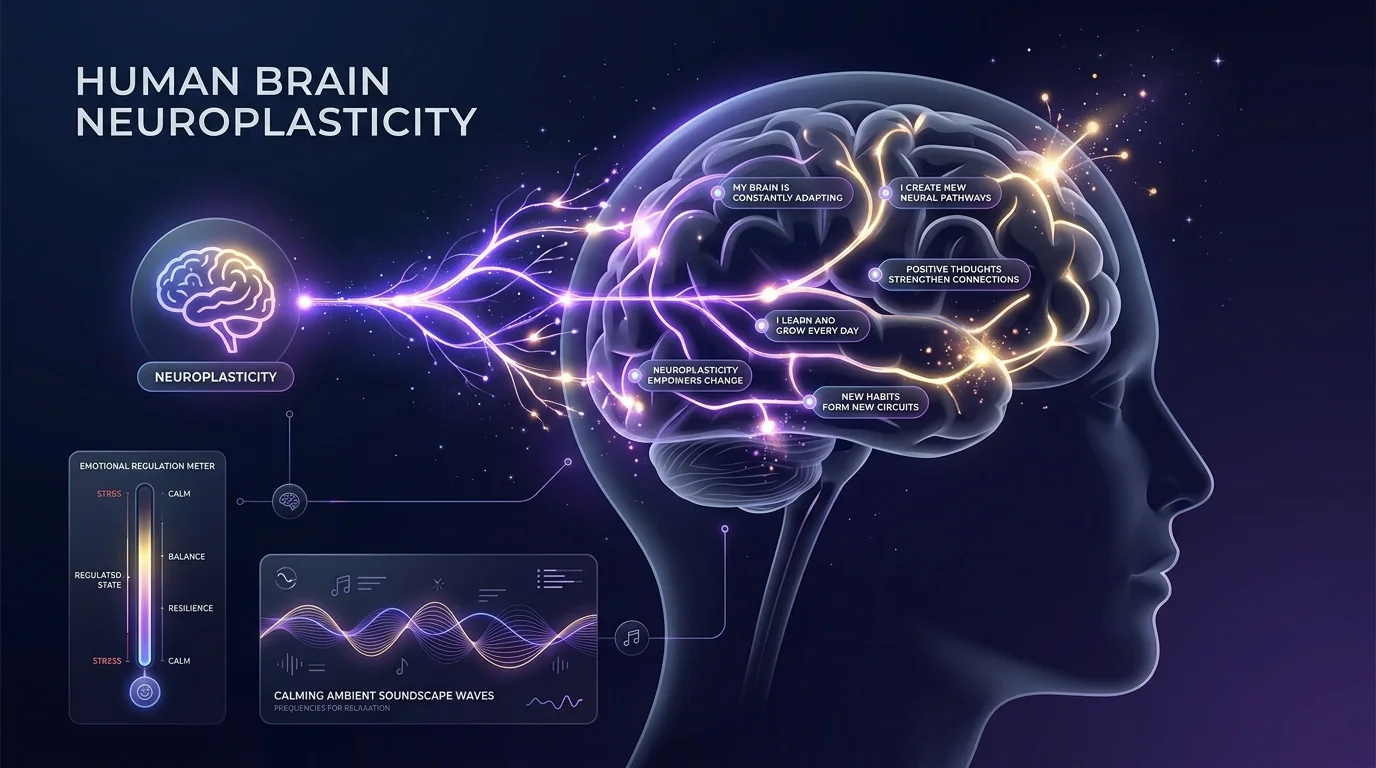
What fMRI Brain Scans Reveal
A landmark neuroimaging study published in the journal Social Cognitive and Affective Neuroscience (Cascio et al., 2016) placed participants into MRI machines while practicing self-affirmations. The brain scans demonstrated significant activation in two key reward and valuation regions:
- Ventromedial Prefrontal Cortex (vmPFC): The area responsible for self-processing, personal values, and positive future envisioning.
- Ventral Striatum (VS): The brain's core reward and dopamine center that reinforces adaptive, healthy behaviors.
By activating these neural reward centers, affirmations buffer the brain against stress-induced cortisol spikes and prevent automatic catastrophic thinking loops.
Comparison: Passive Worry vs Active Affirmation
| Mental State | Primary Brain Region | Neurochemical Output | Long-Term Psychological Outcome |
|---|---|---|---|
| Chronic Self-Criticism | Amygdala & Default Mode Network | Elevated Cortisol, Adrenaline | Attentional narrowing, chronic fatigue, anxiety |
| Neutral Distraction | Dorsolateral Prefrontal Cortex | Baseline Neurotransmitters | Temporary relief without structural mindset shift |
| Value-Based Affirmation | vmPFC & Ventral Striatum | Dopamine, Serotonin, Oxytocin | Stress resilience, cognitive flexibility, emotional calm |
How to Build a 3-Minute Daily Mindset Ritual
- Anchor in the Morning: Dedicate 2 to 3 minutes upon waking to read or listen to core statements centered around capability, calm, and personal values.
- Pair with Ambient Soundscapes: Listening to soft ambient frequencies or 432 Hz soundscapes synchronizes alpha brain waves, enhancing receptivity to constructive thoughts.
- Embody the Feeling: Do not just repeat words mechanically. Focus on the physical sensation of calm and confidence in your chest and shoulders.
Stanford Self-Affirmation Principle
Psychologist Dr. Claude Steele demonstrated that affirmations work best when focused on timeless personal virtues (such as gratitude, kindness, and perseverance) rather than unrealistic superficial claims.
Cultivate Inner Calm Every Day
With Lumio: Daily Affirmations, you get curated daily affirmations for mindset, self-confidence, personalized astrological insights, and soothing ambient soundscapes designed to ground your thoughts and cultivate lasting emotional balance.
Caffeine Half-Life & Sleep Disruption Calculator
Calculate how much active caffeine remains in your bloodstream at bedtime ($5.5 ext{h}$ elimination half-life) and find your exact last safe coffee cutoff time.
Bloodstream Concentration Decay Timeline:
90-Minute Sleep Cycle & REM Bedtime Calculator
Calculate optimal bedtimes and wake times aligned with 90-minute ultradian sleep cycles to wake up energized without grogginess.
Optimal Bedtime Options:
Habit Formation & RAS Priming Tracker
Calculate your neuroplasticity consolidation milestones based on cognitive psychology research.